VÖBAM - Din källa till den äldre bild- och kartvärlden. - Tel: 08-102121 - Epost: info@vobam.se
Biografier.

WERGELAND, HARALD NICOLAI STORM.

1814-93. Född i Bergen, död i Christiania (Oslo).
Norsk officer. Tog examen 1831 vid Krigsskolan, år 1849 blev han kapten i artilleribrigaden, 1852 överstelöjtnant vid Generalstaben, 1856 överste och chef för 'Kristiansandske infanteribrigaden'. Under åren 1857-60 var han chef för Generalstaben i Norge och 1859 blev han utnämnd till generalmajor och var 1860-68 chef för norska armédepartementet. Efter att ha tagit avsked som statsråd blev han chef för '2:a Akershusiske infanteribrigaden' och 1875 utnämnd till generallöjtnant. Från 1840 var Wergeland under några år anställd som trigonometrist vid 'Norges Geografiska Opmaaling'. 1849 deltog han i norsk-ryska gränsdragningen. Waligorskis och Wergelands vägkarta utgavs första gången 1847 och kom fram till 1893 i 8 nyutgåvor. Wergeland var ofta anlitad i militärt organisationsarbete och var dessutom den förste medlemmen i 'Norsk Jaeger- og Fiskerforening'.


Halvorsen.


Zuda Rokashi [priest Hotan].


The first Buddhist world map printed in Japan and the prototype for all subsequent Buddhist world maps printed in Japan until the late nineteenth century. The author, Hotan (1654-1728) was a scholar-priest and founder of the Kegonji Temple in Kyoto. The earliest known example in Japan is the Gotenjiku Zu (Map of the Five Indies) by the priest Jukai dating from 1364 and now preserved in Horyuji Temple in Nara. However Hotan’s map was revolutionary in being the first printed Oriental map to introduce detailed Western cartographic information into this traditional Buddhist cosmological view and attempt to merge the two together into a comprehensible form. Europe is depicted as a series of islands in the upper left of the image whilst South America is likewise another island in the lower right of the image. Africa is omitted completely. China and Japan are clearly defined in the upper right of the map. The popularity of the map is evidenced by the fact that although the map is dated 1710, it was reissued unchange
...
Bland arbeten.
Nantanbushu Bankoku Shoka No Zu [Map of the Universe as a result] [Kyoto: Uhei Bundaiken, Hoei 7 (1710)]


Sotheby's. Murogo & Unno, “The Buddhist World Map in Japan” in /M Xvi (1962); H. Cortazzi, “Island of gold, p.38 pl.48; Harley & Woodward, “The History of Cartography, 2.2, pp. 428ff and Fig. 11.59; Nanba, “Old Maps of Japan, p. 179 pl.8; K. Yamashita, “Japanese Maps of the Edo Period, pp. 32-33 ill.1.


Plancius, Petrus.

1562-1622.
Plancius was a theologian and minister of the Dutch Reformed Church who fled with many of his compatriots from religious persecution in Flanders to settle in Amsterdam in 1585. There he became interested in navigation and cartography and, being fortunate enough to have access to nautical charts recently brought from Portugal, he was soon recognized as an expert on the shipping routes to India. He was interested, too, in the idea of a North East passage until the failure of Willem Barentsz's third voyage in 1597 seemed to preclude the possibility of such a route. In 1602 he was appointed cartographer to the new Dutch East India Company.
Although Plancius produced no atlases his individual maps and charts, over 100 in all, exercised much influence on the work of other cartographers at the turn of the century. His very large wall map of the world dated 1592 was of particular significance.


Gulddistriktet Klondike - ca 1897.


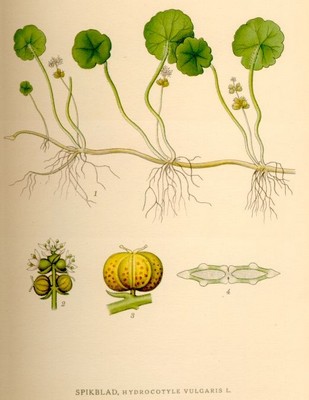
Snärjmåra, Galium aparine - Lindman, C. A. M, Bilder ur Nordens Flora 1917-26.


Sök efter biografi:

Du sökte på: 10256

Klicka på valfri bokstav för att återgå till hela listan.  

A  B  C  D  E  F  G  H  I  J  K  L  M  N  O  P  Q  R  S  T  U  V  W  X  Y  Z  Å  Ä  Ö

MAKHAYEV, MIKHAIL IVANOVICH.

Biografiska uppgifter:B. Smolenskoye, Vereysky district [now Moscow region], 1716-18; d. St Petersburg, 25 Feb 1770.
Russian draughtsman and engraver. He was the son of a priest, and from 1729 he studied at the St Petersburg Naval Academy. In August 1731 he was transferred to the instrument-making department of the Academy of Sciences, where he helped to make land-surveying instruments, including theodolites (a training that was of value when he later came to sketch views of St Petersburg); he also learnt how to carve moulds for dies under Georg Unfertsagt (1701-67); and he studied drawing under the two members of the Academy staff, Ottmar Elliger II and Elias Grimmel (1703-58). In June 1743 Makhayev was made director of the cartographic and die-carving section of the Academy, and he was employed there for the rest of his life. Together with his pupils he helped to produce the Atlas rossiyskoy imperii ('Atlas of the Russian Empire'; 1740s); in addition, he provided inscriptions for diplomas for honorary members of the Academy, for porcelain snuff-boxes and for a large silver shrine at the tomb of Aleksandr Nevsky (early 1750s; St Petersburg, Hermitage).

(Bagrow.)

Tillbaka till början.