
Var ansvarig för de ca 4200 geografiska artiklarna i Yverdon-encyclopedin.
Bland arbeten.
Encyclopédie ou dictionnaire universel raisonné des connaissances humaines.
1798-1845.
Lantmätare, verksam i Dalarna.
Bland arbeten.
Charta öfver Thorsångs socken i Stora Kopparbergs län [Kartografiskt material] / ifrån en af landtm. C.P. Nyrén uppgord charta transporterad... af A.G. Théel
(b 1813; d London, 19 Dec 1907).
English engraver. He was educated in Ghent, Belgium, and later at the Royal Academy Schools, London, where he was awarded silver medals in 1839 and 1841. He worked in the mixed mezzotint style and exhibited 43 examples of his work at the Royal Academy between 1841 and 1893. Of Stacpoole’s many plates, perhaps the best-known are those after William Holman Hunt’s Shadow of Death (1873; Manchester, C.A.G.) and the battle subjects of Lady Butler. Stacpoole began work early in 1874 on the engraving of Shadow of Death . The original picture had been bought by Thos Agnew & Sons and was exhibited so widely that, on publication of the engravings in 1877, the sale of proofs alone realized more than £20,000. By January 1879 Stacpoole had received a total of £3560 from the Fine Art Society for his plates after Lady Butler’s Roll Call (1874; British Royal Col.; declared for publication in 1874), Quatre Bras (1875; Melbourne, N.G. Victoria) and Balaclava (1876; Manchester, C.A.G.; both declared in 1876).
Bland arbeten.
Shadow of Death (1873; Manchester, C.A.G.), Lady Butler’s Roll Call (1874; British Royal Col.; declared for publication in 1874), Quatre Bras (1875; Melbourne, N.G. Victoria) and Balaclava (1876; Manchester, C.A.G.; both declared in 1876).
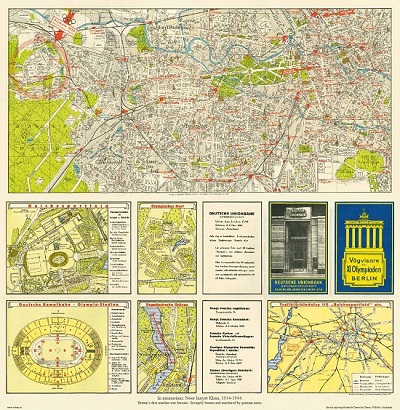
Vägvisare för XI Olympiaden i Berlin - 1936
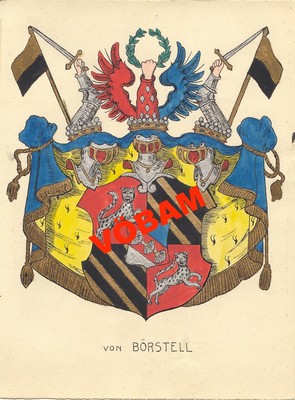
von Börstell - C. H. Tersmeden ca 1900.
