
Nämnd som 'Cosmographer and Navigator in le Havre' (1613). Utförde bl.a. en karta över Atlantiska Oceanen.
(RdeT.
1862-1948. Född i Bergen, död i Oslo.
Norsk officer. Började studera 1882, blev officer 1889 och kapten i 'Bergenske Brigade' 1897. 1916 tog han avsked. Under åren 1895-99 var han mättekniker vid 'Norges Geografiska Oppmåling'. Till Norges jubileumsutställning 1914 utförde han ett par stora reliefkartor. Han var även målare och bildhuggare och deltog i flera utställningar och tävlingar. Under en tid ledde han Bergens konstförening.
Född d. 18 maj 1717. Död i Stockholm d. 19 mars 1793.
Arkitekt, gravör, konstälskare. Född d. 18 maj 1717. Son af Erik Bure och Rebecka Rehn (af den gamla stockholmska borgarsläkten), upptog R. moderns släktnamn.Gift med Anna Kristina Rungren.
Efter idkade militärstudier, därunder han lade sig särdeles vinn om teckning, ingick han vid fortifikationen och befordrades till löjtnant-dessinatör vid nämnda kår.
För att blifva i tillfälle att lära etsningskonsten eller, såsom det då hette, »skedvattensgravyren», reste han 1740 med offentligt understöd till Paris och utförde där under Le Bas' skickliga ledning åtskilliga lyckade arbeten i antydda väg, däribland planscherna öfver Ulrika Eleonoras bisättning och begrafning efter Hårlemans teckningar. Nämnda konstnär uppgjorde med honom 1745 ett kontrakt, enligt hvilket han mot årlig lön skulle gå de svenska sidenfabrikerna tillhanda »med mönster- och patronritning samt fasoners projekterande». Han hade vid denna tid återkommit till fäderneslandet, där han blef en eftersökt teckningslärare.
I sällskap med J. P...
(Svenskt biografiskt handlexikon)
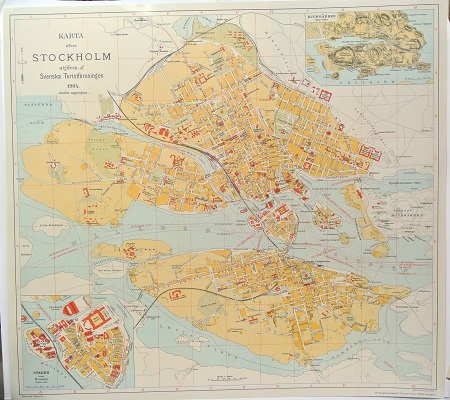
Karta öfver Stockholm. - 1904.
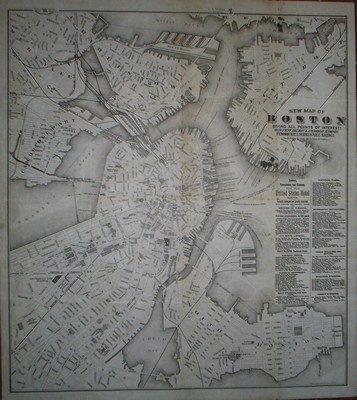
'New Map of Boston...' - 1883.
