
1541-1622.
Teolog och förläggare. Mest känd för sin medverkan i utgivningen av 'Civitates Orbis Terrarum' där han även utförde texterna. Verksam som lärare i Antwerpen 1566-1568 där han träffade Franz Hogenberg. Efter Hogenbergs flytt till Köln 1570 träffades Braun och Hogenberg igen och inledde ett samarbete. I ett brev från Braun till Ortelius daterat 31 oktober 1571 så insinuerar Braun att 'Civitates Orbis Terrarum' var Hogenbergs idé då han kallar den 'Mäster Frans' bok om städer'. Arbetets första del utkom 1572 och slutfördes först 1618.
Bland arbeten.
Civitates Orbis Terrarum.
Född 1730.
Fransk abbot och geograf. Gav 1780 ut 'Geographie moderne avec Introduction'. 1787 och 1791 kom nya utgåvor, korrigerade och utökade med kapten Cooks upptäckter. Medlem av 'L'Académie Royale des Scienses et Belle-Lettres' i Rouen.
Bland arbeten.
Geographie moderne avec Introduction.
Phillips.
Född 1707 19/12 i Bettna sn (Söd.), död 1747 12/1 i Stockholm (Jakob).
Brukspredikant och komminister. Kopparstickare. Son av kyrkoherden Anders G. Och Catharina Bergander. Elev av Johan van den Aveelen o. 1724. Student vid Uppsala universitet 1725, brukspredikant vid Vällinge i Salems sn (Sthlm) 1737, komminister i Jakobs och Johannes församlingar i Stockholm 1740. Kusinen C. E. Bergquist har graverat ett porträtt av sin lärare Geringius med följande omskrift:
»Den oss i koppar har så mänga bilder visat
Blir här i koppar sjelf af eftervärlden prisat
Som prest och konstnär har han tjent sitt fosterland
Var nitisk i sitt kall och konstrik i sin hand.»
Bland arbeten.
O. CELSIUS d. ä., De insula Melita, diss., resp. A. Geringius, Uppsala 1725: karta över Malta.
Antependium i Riddarholmskyrkan, 1726, kpst., avsett för J. Possieths tillämnade beskrivning över Riddarholmskyrkan.
P. TILLAEUS, Karta över Stockholm, efter P. Wallrave, 1733, utförd i samarbete med C. E. Bergquist, jämte porträtt av Fredrik I, efter M. Mijtens, kpst.
Karta över Mälaren, 1739.
Karta över Södermanland, 1743.
M. A. SAHLSTEDT, Stora Tuna i Dahlom och Bergom minnesdöme, Sthlm 1743: karta över Stora Tuna.
Hultmark, 1944.
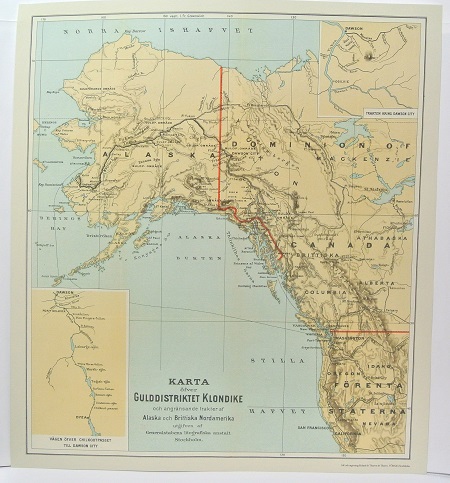
Gulddistriktet Klondike - ca 1897.
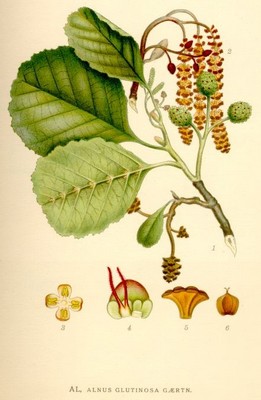
Al, Alnus glutinosa - Lindman, C. A. M, Bilder ur Nordens Flora 1917-26.
