
Född den 15 augusti 1794 i Femsjö i Småland (Jönköpings län), död den 8 februari 1878 i Uppsala.
Elias Magnus Fries, var en svensk botaniker. Han var professor i Uppsala och ledamot av Svenska Akademien 1847–1878 (stol 14) samt rector magnificus för Uppsala universitet 1839 samt 1853–1854.
Fries är framför allt känd för sitt växtsystematiska arbete rörande svampar, Systema mycologicum (tre delar, 1821–1832), och räknas som en av den moderna mykologins grundläggare. I Statens porträttsamling på Gripsholms slott återfinns en bröstbild av Fries utförd av Johan Gustaf Sandberg 1838.
Han ligger begravd på Uppsala gamla kyrkogård.
Fries var son till kyrkoherden, prosten Thore Fries (1762–1839) från Femsjö i Småland och Sara Elisabeth (Sara-Lisa) Wernelin (1769–1837). Hans släkt, den så kallade 'Eliassläkten', härstammar från Adam Jonsson Fries (1640–1710), en sporrsmed från Norrköping. Namnet 'Frijs' kom in i släkten med Adam Jonsson, och fortsatte med hans son Thore Adamsson (1683–1732) – 'Fris', 'Friese', 'Frijs eller 'Fries'.
Fries studerade ursprungligen botanik vid Lunds universite...
Född 1700, dp 2/2, trol. i Malungs sn (Kopp.), där samtliga kyrkböcker för detta år brunnit, död 1755 23/2 i Stockholm (Klara).
Kopparstickare och kartograf. Konduktör vid Fortifikationen. Ingenjör. Son av komministern Petrus B. och Elisabet Persdotter. Ingenjör vid Lantmäterikontoret och föreståndare för dess tryckeri 1739
Bland arbeten.
A. GIESE, Prospect af Stockholms stad, jämte deviser, hörande till frögdebetygelsen vid K. Fredriks hemkomst från Hessen, 1731, kpst.
GRÖNWALL, De lacu Siljan, diss., resp. O. Silieström, Uppsala 1730: Siön Sillian, kpst.
Karta över Uppland. 1742.
Karta över Västmanland, 1742.
Vägvisare til och ifrån alla städer och namnkunnige orter uti Svea och Götha riken samt storfurstendömet Finland, Sthlm 1743.
Karta över Närke. 1745
Karta över Svea och Göta riken med Finland och Norrland, 1747.
Karta över Stockholm med dess malmar och förstäder, 1751.
Karta över Skåne, 1752.
Vägkartor över Sverige och Finland.
Hultmark, 1944.
fl. 1598-1610.
Langenes was a publisher in Middelburg about whom little is known except that he was probably the author of the text and publisher of the first edition of a very well known miniature atlas, the Caert Thresoor. After an uneasy start - some maps were missing from the first edition - the atlas acquired new life in Amsterdam with a re-written text and eventually with re-engraved maps which prolonged its use and popularity for about half a century.
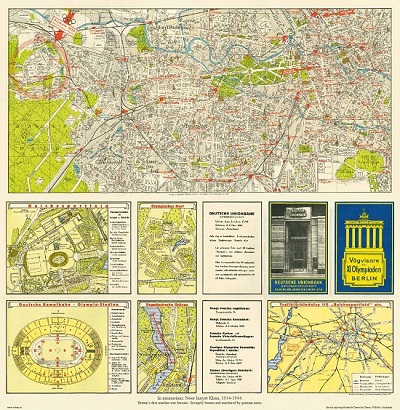
Vägvisare för XI Olympiaden i Berlin - 1936
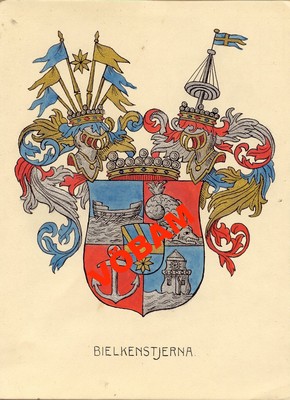
Bielkenstjerna - C. H. Tersmeden ca 1900.
