
1664-1740.
In 1691, employed by Petter Gedda as tutor at the marine officers' college. Strömcrona would later succeed Gedda, first as captain then director of pilots. For more than 40 years, he was responsible for sea measurements and the charting of Swedish shipping waters.
Sveriges sjökartor – A. Hedin.
Engelsk kartograf i början av 1800-talet. Medarbetare vid C.V. Lavoisnes 'A new genealogical, historical and chronological atlas' 1807. Den första utgåvan innehöll bara historiska tabeller men i senare engelska och amerikanska utgåvor bifogades kartor av Gros.
Bland arbeten.
A new genealogical, historical and chronological atlas.
Phillips.
1790-1873.
Engelsk kartograf. Brorson till den kände kartografen Aaron Arrowsmith (se denne) och gick i lära hos honom från 1810. Vid morbroderns död etablerade han en egen kartaffär i London. Hans första publikation var en 'London Atlas', som kom ut 1834 och senare i två upplagor till. 1858 kom en ny och stor atlas med 68 kartor. Han gav dessutom ut en mängd specialkartor och utförde också kartor för flera geografiska verk. Arrowsmith var 1830 med om att grunda 'Royal Geographical Society' i London.
Bland arbeten.
London Atlas.
Dict. nat. biogr.
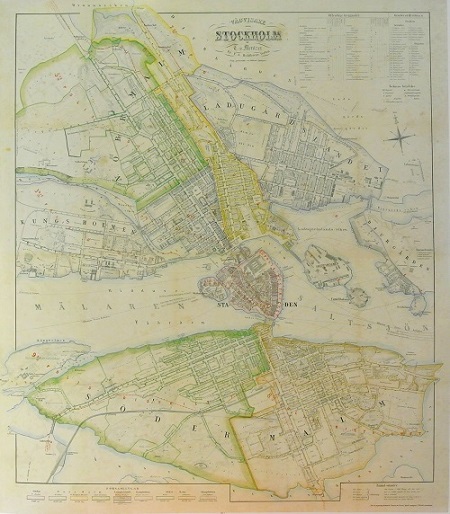
Stockholm - Mentzer ca 1860.
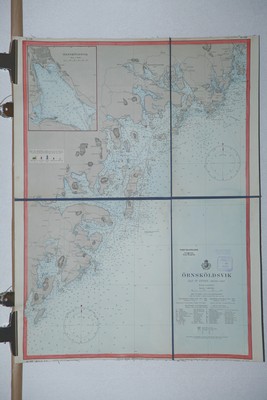
Örnsköldsvik. - Stockholm 1927.
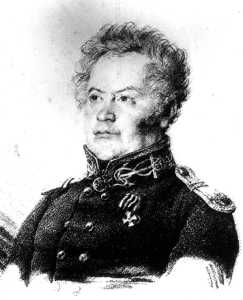
Knight Leontiy Vassilievich Spafaryev (1765 - 30 January 1847) was a Lieutenant General of the Imperial Russian Navy. Spafaryev was Director of the Lighthouse Administration and cartographer of the Russian Admiralty.
Spafariev was an important contributor to the improvement of navigation along the Russian coasts. The first lighthouses in Russia were built during tsar Peter the Great's drive for reform and modernization at the beginning of the 18th century. However, it was only until the Administration of Lighthouses was created in 1807 that the Russian lighthouse system followed an organized pattern, becoming effective and efficient. This office was established by the Russian Navy and it began under the leadership of Leontiy V. Spafaryev.
As a cartographer, perhaps his most outstanding work is the 'Atlas of the Gulf of Finland', published in 1817. His name is spelt as 'Spafarief' or 'Spafarieff' in the United States.
The Spafaryev Islands in the Sea of Okhotsk and Spafarief Bay in the coast of Alaska were named after Leontiy V. Spafaryev.
Utgav i S:t Petersburg 'Atlas of the Gulf of Finland containing the South Coast, with the Islands from cape Luserort to Cronstadt with Light houses & Towers necessary to be known for sailing by night'. Denna atlas innehåller 12 större kartor varav flera utvikbara. Stor folio.
Bland arbeten:
Atlas of the Gulf of Finland containing the South Coast, with the Islands from cape Luserort to Cronstadt with Light houses & Towers necessary to be known for sailing by night.
- Se bild.
