
1703-1759.
Admiralty lieutenant and pilot officer in Stockholm 1751. Had studied map production with the Van Keulen family firm in Amsterdam. In 1748, published a revised edition of Johan Månsson's classic book on Baltic shipping, under the title Johan Månsson 's revived ashes, or renewed sea markings book. .. with the addition of Shipping channels along the Kattegat and the Skagerrak (Johan Månssons uplifwade aska, eller des förnyade Sjömärkesbok... Jämte tilökning öfwer farwatnen uti Kattegatt och Skagerack).
Bland arbeten.
Johan Månsson 's revived ashes, or renewed sea markings book. .. with the addition of Shipping channels along the Kattegat and the Skagerrak .
Sveriges sjökartor – A. Hedin.
Cartographer Gaudersleben.
Bland arbeten.
Thuringia 24 sh. 1625, used Blaeu 1634.
Tooley.
Knight Leontiy Vassilievich Spafaryev (1765 - 30 January 1847) was a Lieutenant General of the Imperial Russian Navy. Spafaryev was Director of the Lighthouse Administration and cartographer of the Russian Admiralty.
Spafariev was an important contributor to the improvement of navigation along the Russian coasts. The first lighthouses in Russia were built during tsar Peter the Great's drive for reform and modernization at the beginning of the 18th century. However, it was only until the Administration of Lighthouses was created in 1807 that the Russian lighthouse system followed an organized pattern, becoming effective and efficient. This office was established by the Russian Navy and it began under the leadership of Leontiy V. Spafaryev.
As a cartographer, perhaps his most outstanding work is the 'Atlas of the Gulf of Finland', published in 1817. His name is spelt as 'Spafarief' or 'Spafarieff' in the United States.
The Spafaryev Islands in the Sea of Okhotsk and Spafarief Bay in the coast of Alaska...
Bland arbeten.
Atlas of the Gulf of Finland containing the South Coast, with the Islands from cape Luserort to Cronstadt with Light houses & Towers necessary to be known for sailing by night.
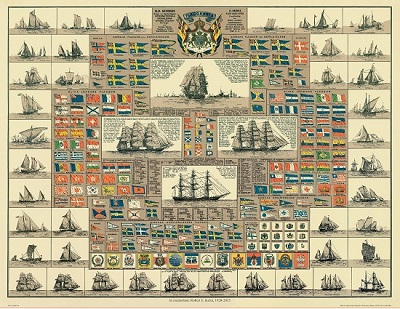
Amiral Häggs flaggkarta. - Stockholm 1888.
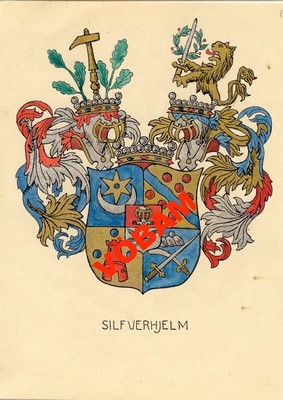
Silfverhjelm - C. H. Tersmeden ca 1900.
